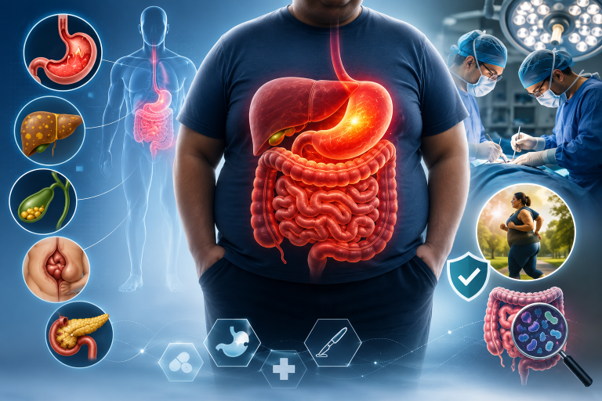
For many, the conversation around obesity focuses on numbers on a scale or cardiovascular health. But there's a deeper, often silent, story unfolding within your digestive system. Excess body weight isn't just a matter of appearance; it places a significant and measurable strain on your entire gastrointestinal tract, from your esophagus to your liver.
This strain can lead to chronic conditions that diminish your quality of life and, critically, can complicate necessary surgical procedures. Understanding this connection is the first step toward taking control. This guide is designed to walk you through how obesity affects your digestive health, the real risks it poses for surgery, and how specialized care can create a clear path toward better long-term health.
Globally, 1 in 8 people lived with obesity in 2022 — a figure that has more than doubled since 1990, making related digestive conditions increasingly common.
How Obesity Affects Your Digestive System
The physical pressure and metabolic changes caused by obesity can trigger a cascade of digestive problems. Here's a closer look at the most common issues:
Gastroesophageal Reflux Disease (GERD)
Excess abdominal fat increases pressure on the stomach, forcing acid up into the esophagus. This weakens the lower esophageal sphincter (LES), the valve that normally prevents reflux. The result is chronic heartburn, regurgitation, and potential damage to the esophageal lining.
Non-Alcoholic Fatty Liver Disease (NAFLD/MASLD)
This is one of the most serious and widespread complications. While NAFLD can occur in 14–30% of the general population, its prevalence skyrockets to 75–95% in individuals with obesity — a 4.6-fold higher risk. Over time, fat accumulation can lead to inflammation (NASH), scarring (cirrhosis), and even liver failure. Consulting a knowledgeable liver specialist in Khammam is crucial for early detection and management.
Gallstones
Obesity disrupts cholesterol and bile acid metabolism, leading to the formation of hard deposits in the gallbladder. These gallstones can cause severe pain, block bile ducts, and may require surgical removal.
Hernias
Increased intra-abdominal pressure weakens the abdominal wall, making it easier for organs or tissues to push through, creating a hernia. Obesity not only increases the risk of developing a hernia but also the risk of it recurring after surgical repair.
Pancreatitis
Obesity is a major risk factor for acute pancreatitis, a painful and potentially life-threatening inflammation of the pancreas. This is often linked to obesity-related gallstones or high levels of triglycerides in the blood.
Gastrointestinal Cancers
The link is alarmingly clear. Chronic inflammation and metabolic changes associated with obesity increase the risk of several cancers, including colorectal, esophageal, liver, and pancreatic cancer. Research shows that obesity contributed to 4.6% of all digestive cancer deaths globally in 2019.
Navigating the Knife: Obesity and Increased Surgical Risks
Whether you need a gallbladder removed, a hernia repaired, or any other abdominal surgery, obesity significantly changes the risk profile. An experienced surgical team anticipates and manages these challenges:
- Anesthesia Complications: Administering anesthesia is more complex due to potential airway difficulties and the need for precise dosing. Patients also face a higher risk of respiratory issues after surgery.
- Infections: Adipose (fat) tissue has poorer blood supply, which can impair immune response and delay wound healing, increasing the risk of surgical site infections.
- Blood Clots: Obesity is a known risk factor for deep vein thrombosis (DVT) and pulmonary embolism (PE), dangerous blood clots that can form after surgery.
- Delayed Healing: Reduced blood flow to fatty tissue can slow down the healing of incisions and internal repairs, leading to longer recovery times and complications like wound dehiscence (reopening).
- Technical Challenges: Excess tissue can make surgeries technically more difficult, potentially increasing the duration of the operation and the risk of accidental injury to surrounding organs.
For those considering bariatric surgery itself, specific risks like bowel obstruction (a 33-fold higher risk after some procedures) and nutritional deficiencies must be carefully managed by a specialized gastro hospital Khammam team.
Beyond the Standard: Emerging Approaches to Management
The good news is that medical science is rapidly advancing. Managing obesity to reduce these digestive and surgical risks is no longer limited to diet and exercise alone. Innovative treatments are offering new hope:
- Next-Generation Pharmacotherapies: Drugs like triple-hormone agonists (Retatrutide) and oral GLP-1s (Orforglipron) are showing remarkable effectiveness in promoting significant weight loss and improving metabolic health.
- Endoscopic Therapies (EBMTs): Minimally invasive procedures like endoscopic sleeve gastroplasty (ESG) and intragastric balloons offer effective, non-surgical options for weight management.
- Gut Microbiome Modulation: Research into probiotics and prebiotics is revealing how balancing gut bacteria can improve metabolic health and support weight management efforts.
A forward-thinking digestive health clinic in Khammam will integrate these modern approaches into a comprehensive, personalized care plan.
Your Path to Better Health: When to Seek Specialized Care in Khammam
Ignoring digestive symptoms is a gamble you don't have to take. If you are struggling with your weight and experiencing persistent heartburn, abdominal pain, changes in bowel habits, or other digestive issues, it's time to seek expert guidance.
What a Gastroenterologist Can Do for You
A specialist doesn't just treat symptoms; they uncover the root cause. A visit to a GI specialist in Khammam involves:
- Accurate Diagnosis: Using advanced tools like endoscopy to understand precisely what's happening inside your digestive tract.
- Personalized Treatment Plan: Developing a strategy that may include medication, lifestyle modifications, or recommending advanced procedures.
- Risk Mitigation: Creating a proactive plan to manage your weight and digestive health to prevent future complications and reduce surgical risks.
Why Choose Steth & Scalpel in Khammam
At Steth & Scalpel, we believe in combining advanced medical excellence with compassionate, patient-centered care. Our clinic, led by Dr. Rakesh Shaganti and Dr. Jaya Sravani Donepudi, is recognized as a leading gastro clinic in Khammam. We provide a comprehensive approach to obesity-related digestive disorders.
Whether you need advice from the best gastroenterologist Khammam has to offer, a consultation with an expert stomach specialist Khammam, or access to minimally invasive surgical options, our team is here to guide you with trust and reliability. We are committed to helping you manage your condition effectively and achieve lasting digestive health.
Frequently Asked Questions
Can obesity cause long-term digestive problems?
Yes. If left unmanaged, obesity can lead to chronic conditions like GERD, irreversible liver damage (cirrhosis), and an increased risk of gastrointestinal cancers. Early intervention is key to preventing long-term damage.
Is fatty liver disease reversible?
In its early stages (steatosis), fatty liver is often reversible with significant lifestyle changes, including weight loss, a healthy diet, and exercise. A gastroenterologist or liver specialist can help you create an effective management plan.
Does losing weight help acid reflux?
Absolutely. Losing even a moderate amount of weight can significantly reduce intra-abdominal pressure, which is a primary driver of acid reflux. For many people, weight loss leads to a dramatic improvement or even complete resolution of GERD symptoms.
What are the main risks of surgery if you are obese?
The primary risks include complications with anesthesia, higher rates of infection, an increased chance of blood clots, delayed wound healing, and longer recovery times. A skilled surgical team will implement specific protocols to mitigate these risks.
Which doctor is best for gastric problems?
A gastroenterologist is a medical specialist who focuses on the diagnosis and treatment of diseases of the entire digestive system, including the stomach, intestines, and liver. They are the ideal experts to consult for any persistent gastric or digestive issues.
Take the First Step Toward a Healthier Future
Understanding the link between your weight, your digestive health, and your safety during surgery is empowering. It allows you to move from a place of concern to a position of control. At Steth & Scalpel, we are dedicated to being your trusted partner on this journey.
Don't wait for symptoms to worsen. Schedule a consultation with our expert team today and take a proactive step towards protecting your long-term health.